Digital AI Authentication at scale, trust through AI Vision scanning.
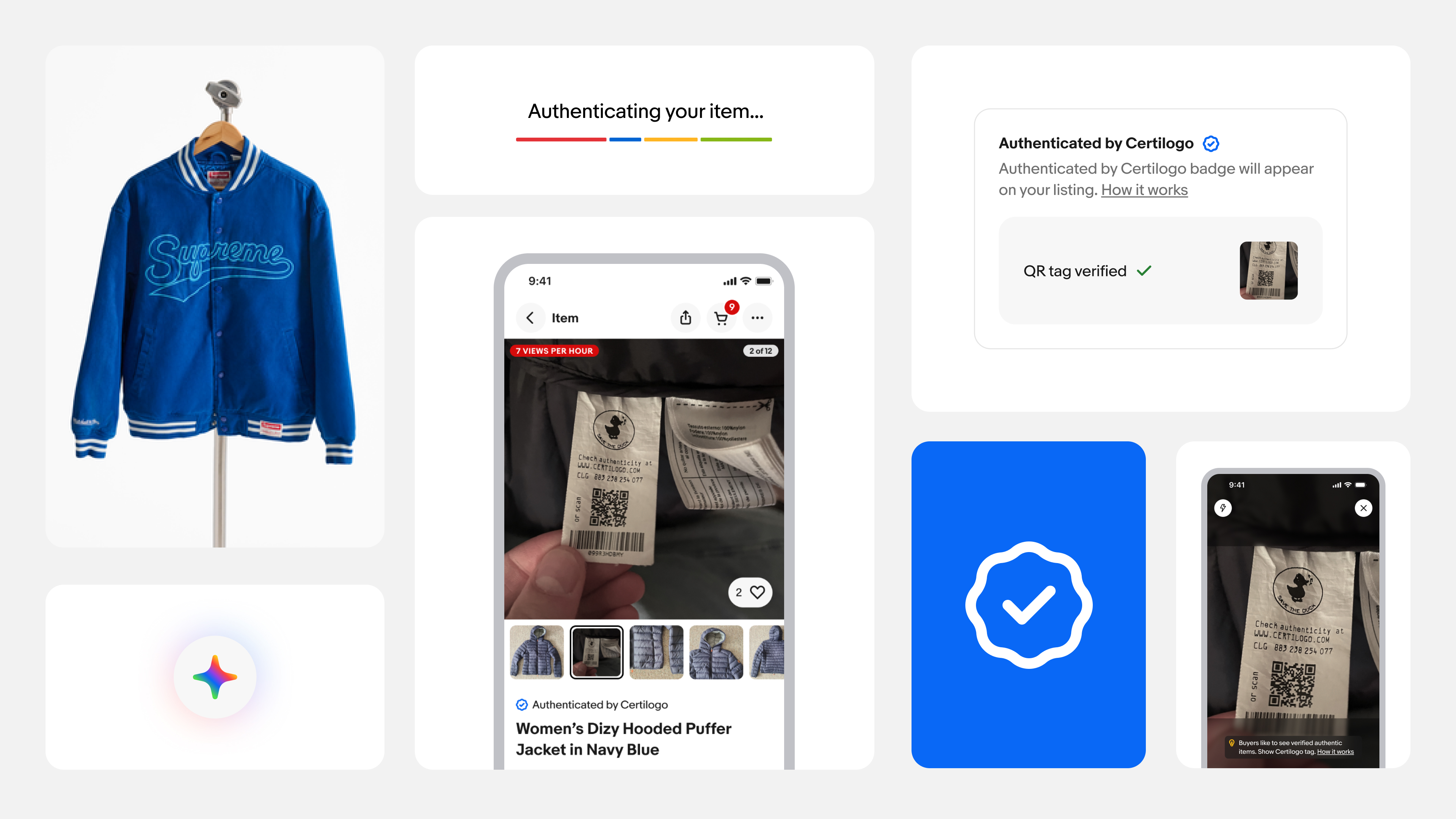
Overview
Integrating AI vision scanning to close the fashion resale trust gap
Integrating AI vision scanning and Certilogo digital passports into the listing flow to provide instant, verified authenticity for the fashion resale market. As Lead Product Designer I collaborated closely with Selling Experience squads, Product Managers, Engineers, and the Certilogo team.
The outcome was a significant +13.4% conversion lift: the digital trust marker drove a double-digit increase in "Buy It Now" actions for authenticated listings compared to items of eligible brand without a trust marker.
Context
A trust gap for mid-tier fashion resale
eBay's "Authenticity Guarantee" (AG) is the gold standard for luxury, but its physical model, which ships items to an authentication centre, was only triggered for clothing items over $200. This created a trust gap for mid-tier streetwear priced between $50 and $200.
Buyers feared counterfeits, but the overhead of physical shipping wasn't viable for lower-margin items. Certilogo's digital authentication covers fashion products below $200, allowing more trust markers to appear on eBay and closing this gap without requiring physical inspection.
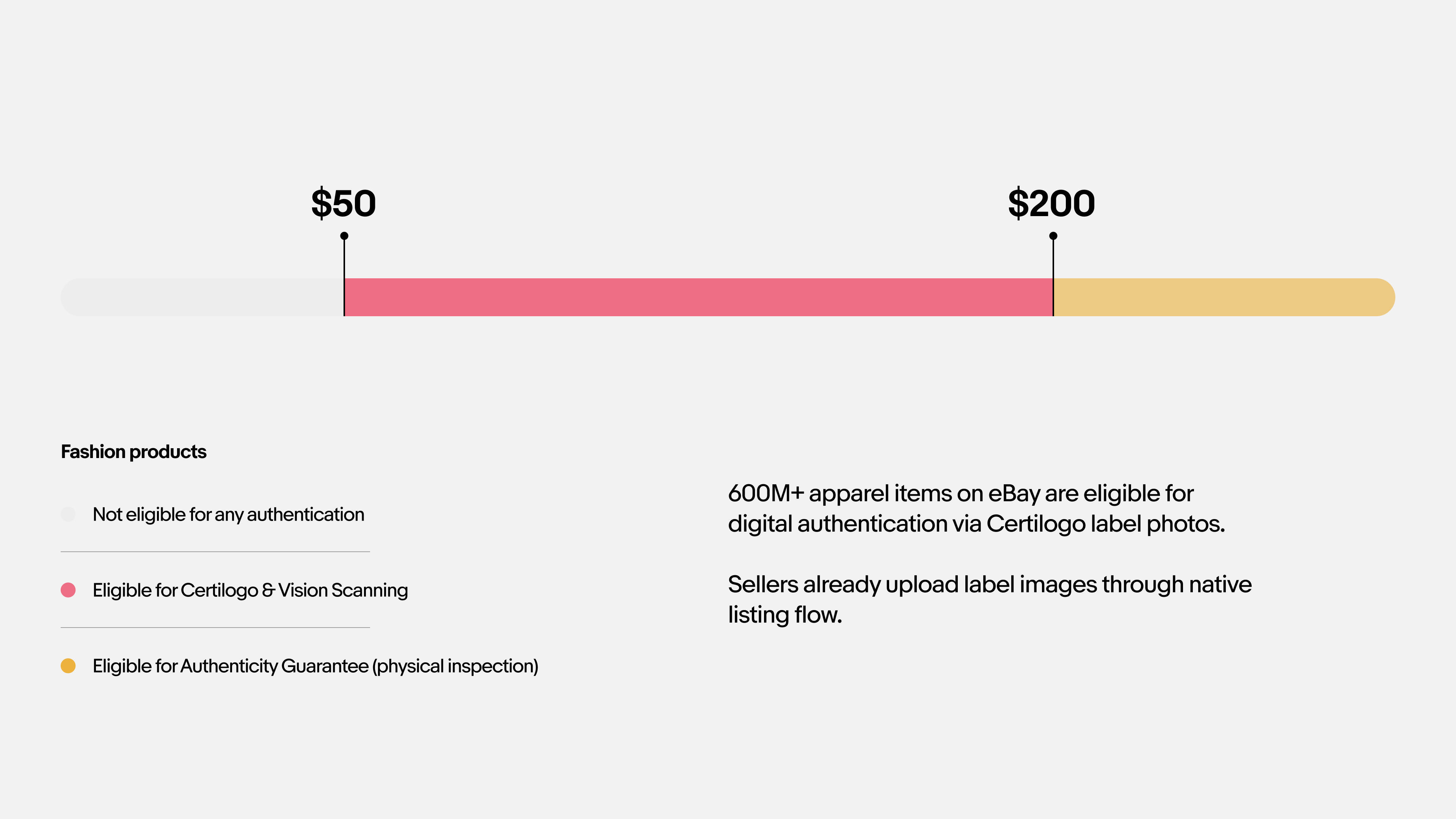
Certilogo brands eligible for digital authentication cover fashion products below $200, unlocking a trust signal for an entirely underserved tier of the market.
Constraints
Designing within hard boundaries
Time to List North Star. The Selling team's primary metric is speed. We could not add any "bulge" or friction that would slow sellers down.
Technical Data Lag. Item metadata (brand/category) is not confirmed until after photos are processed, making it impossible to show brand-specific UI during the initial upload.
Legal & Brand Integrity. We could not use the "Authenticity Guarantee" badge because it legally promises a physical human inspection.
Scope boundary. We were restricted to the new beta photo-first listing experience only, to reduce risk during rollout.
Strategy
Three interlocking design decisions
Systemic Maturity
For eligible brands, the "Review" screen transforms, revealing an "Authenticated by Certilogo" badge, turning a routine check into a high-value reward for the seller.
The Generic Bridge
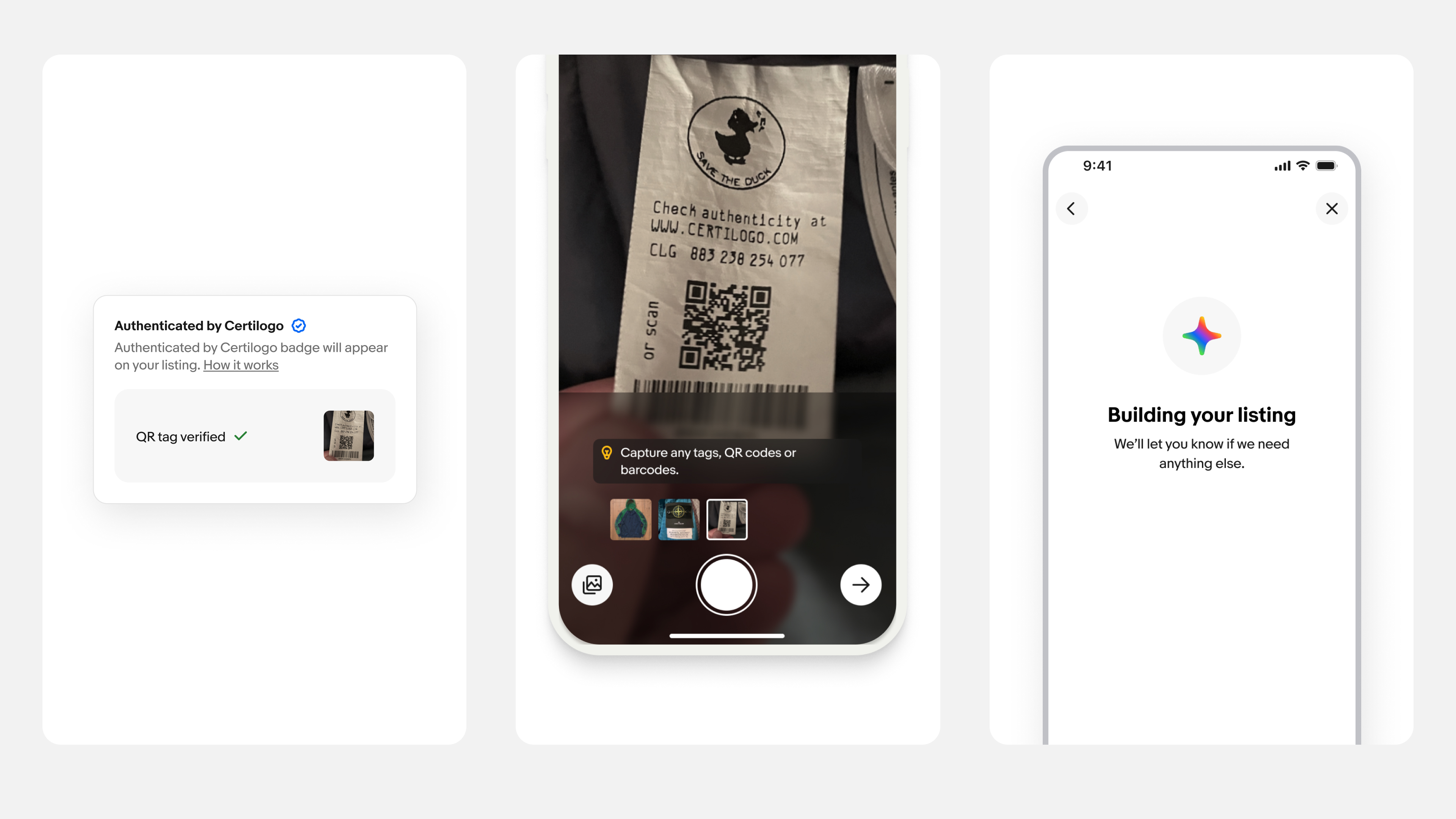
To solve the data-lag issue, I designed a generic photo prompt ("Add labels, QR codes, or barcodes") that applied to all categories. This prompted the necessary behaviour without needing upfront metadata.
The Intercept
Observing that power sellers were already photographing tags and QR codes, we built an AI listener to "intercept" these images during the standard upload process, with zero friction and maximum signal.
Execution
Designing for the real world
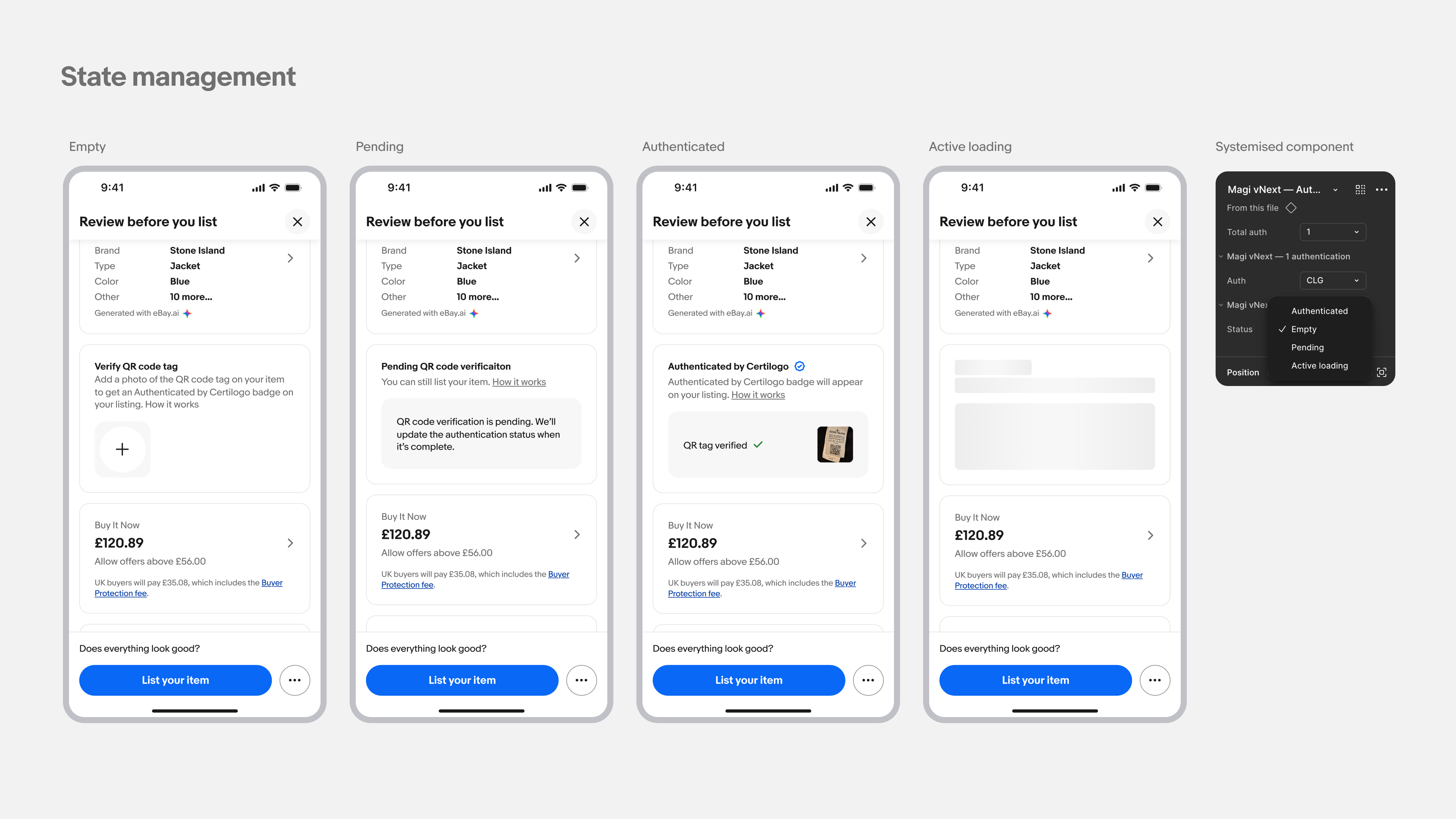
AI isn't perfect, and the physical world is messy. We designed robust failure and compliance states to handle real-world complexity throughout the flow.
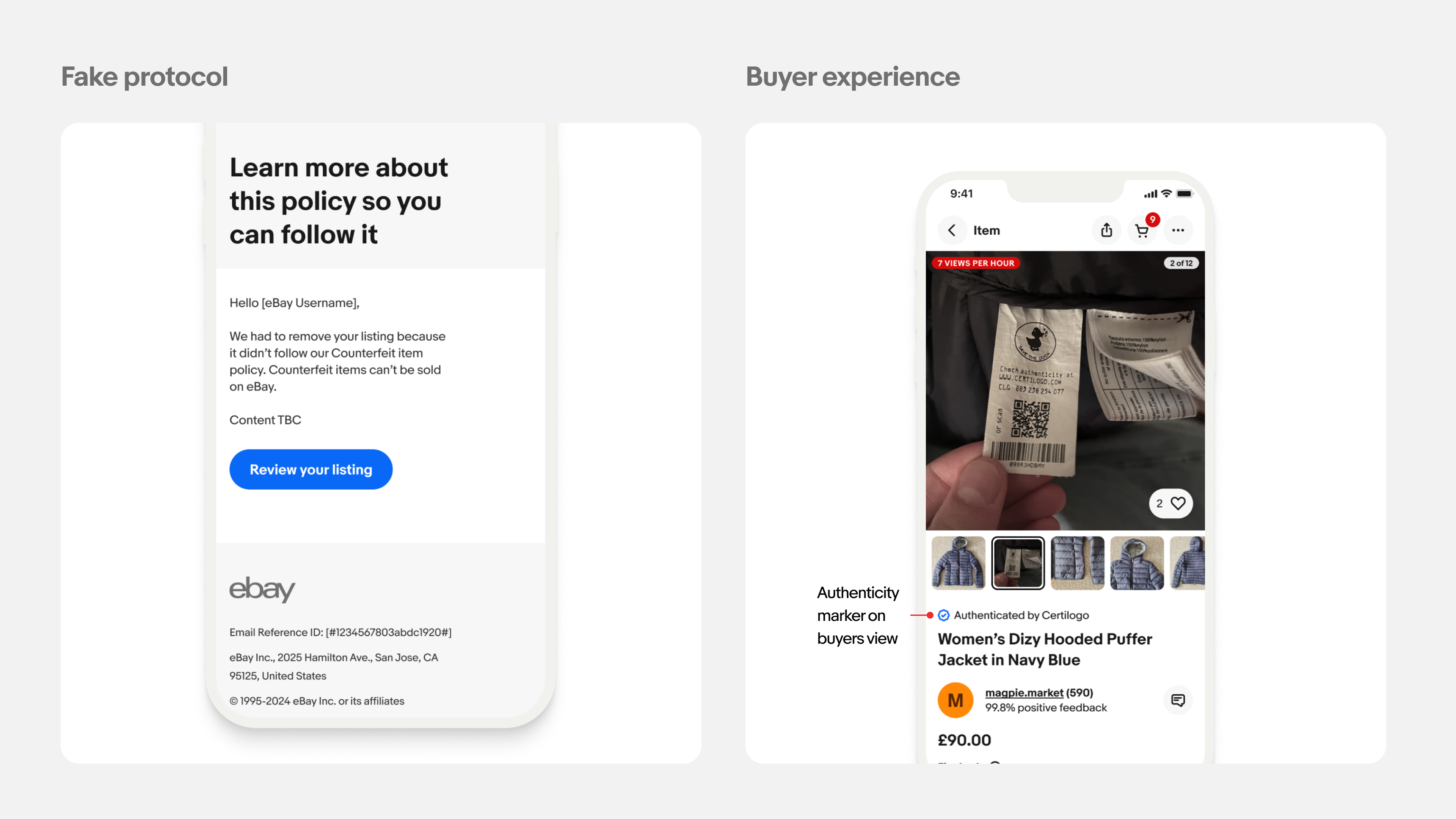
The "Fake" Protocol
To avoid high-friction confrontations in-flow, items identified as counterfeit were allowed to proceed to an "In-Review" state. Following compliance patterns, these were handled via post-listing removal and email notification.
The Buyer Experience
On the "View Item" page, we mirrored the visual language of the Authenticity Guarantee but used "Authenticated by Certilogo" messaging to maintain legal distinction while maximising buyer confidence.
Impact
Real numbers, real trust
+13.4% Conversion Lift. For eligible items, the digital trust marker drove a significant double-digit increase in "Buy It Now" actions compared to items of eligible brand without a trust marker.
Strategic AI influence. By verifying items digitally, we began training AI models on eBay's vast library of imaged clothing and streetwear items, helping build models that can authenticate items without QR codes. Currently in discovery with the selling team.
The real insight was that users were already "hacking" the system by uploading photos of receipts and QR codes to prove authenticity. This project wasn't just about a new tech feature. It was about designing a system that met users where they already were.