
eBAY
Digital AI Authentication at eBay | Scaling Trust Through AI Vision & Digital Passports
Role
Product designer
Product design
Project management
User research
Visual Design
Interaction Design
Prototyping
Platforms
iOS | Android
Summary
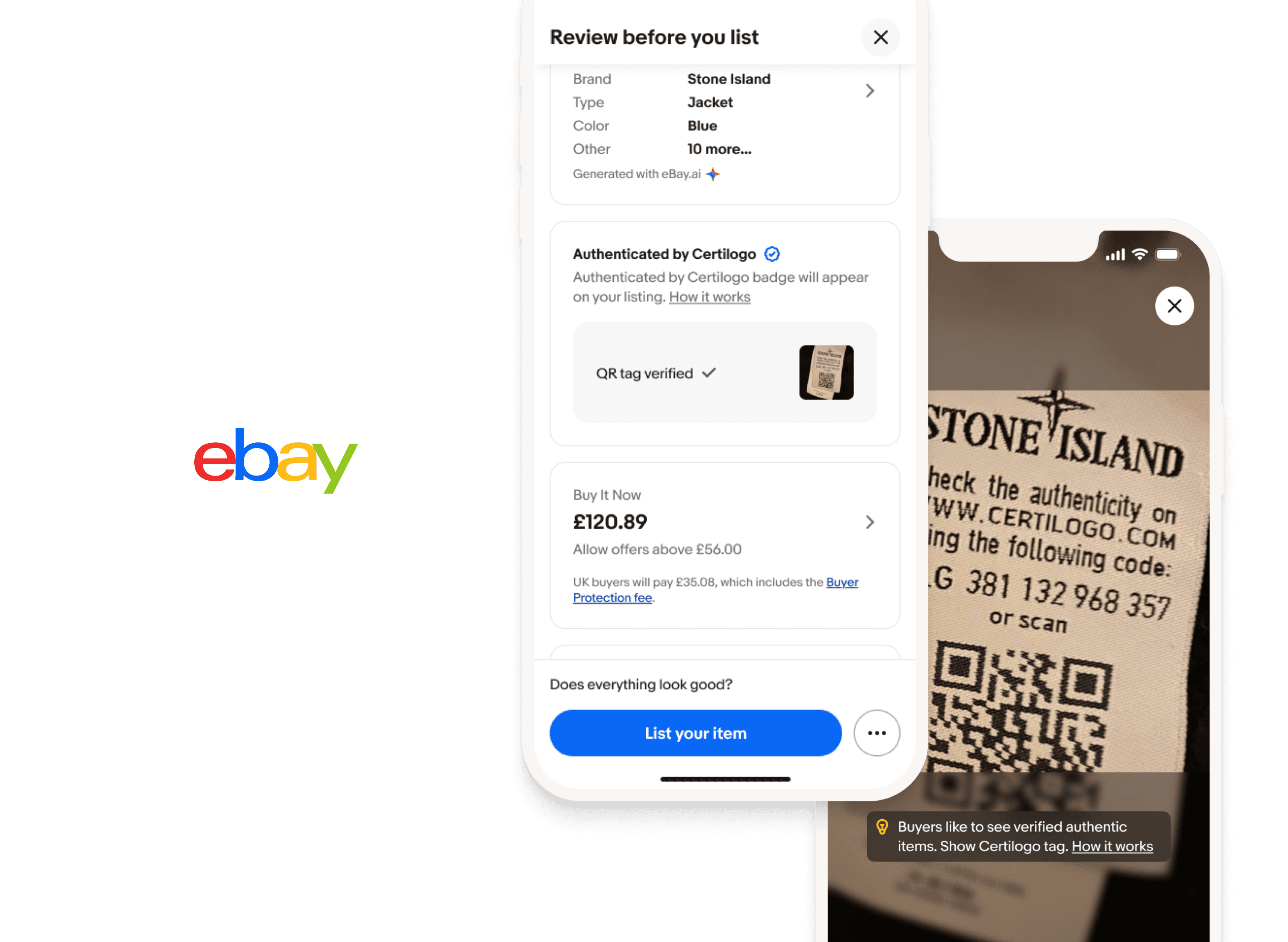
The Project: Integrating AI vision scanning and Certilogo digital passports into the listing flow to provide instant, verified authenticity for the fashion resale market.
The Role: Lead Product Designer (Collaborating with Selling Experience squads, PMs, Engineers, and Certilogo).
The Outcome: +13.4% Conversion Lift: For eligible items, the digital trust marker drove a significant double-digit increase in "Buy It Now" actions. Compared to items of eligible brand without trust marker.
Context
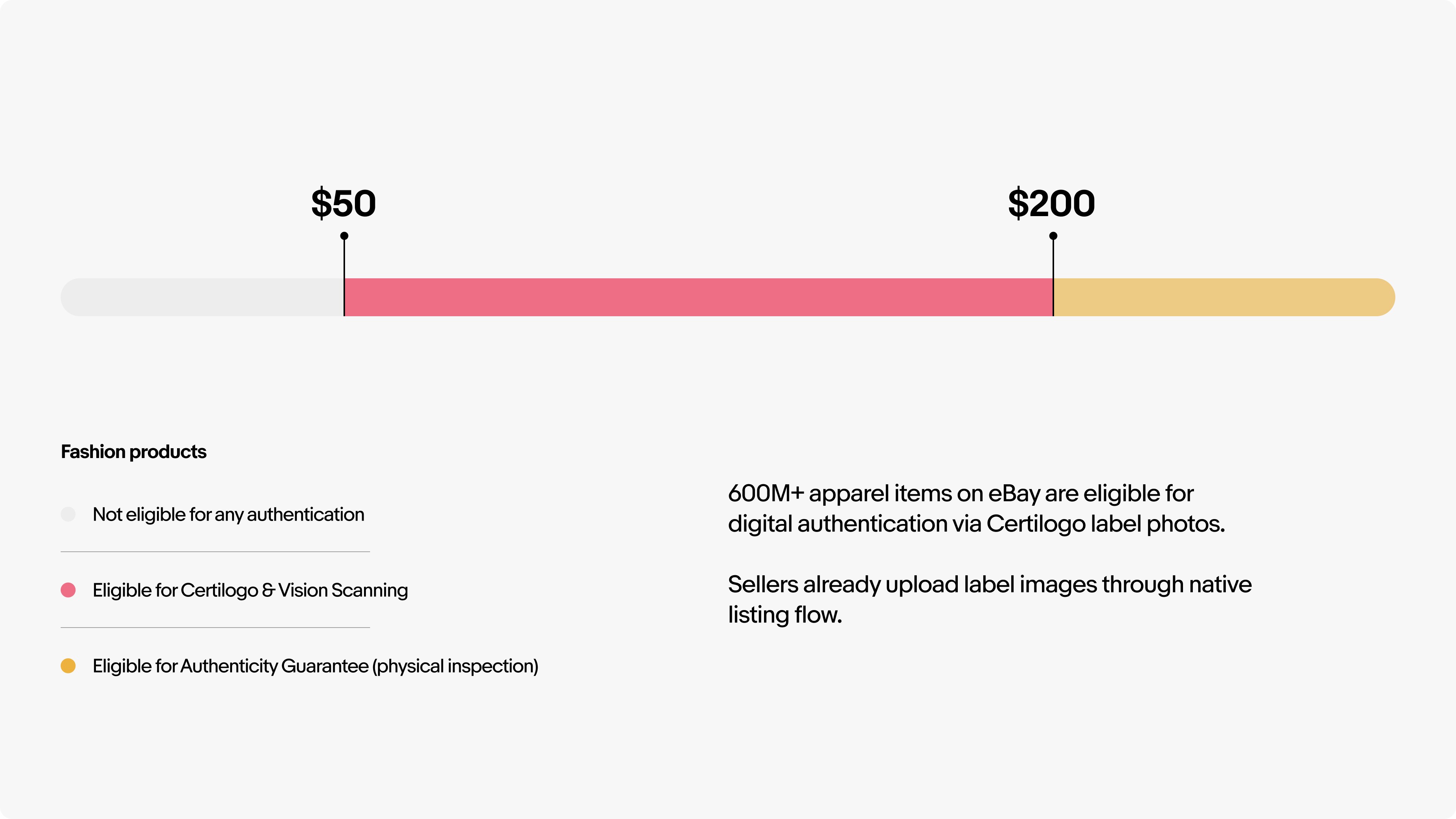
eBay’s "Authenticity Guarantee" (AG) is a gold standard for luxury, but its physical model, shipping items to an authentication center, only triggered for items over $200. (Clothing items)
This created a trust gap for mid-tier streetwear ($50 to $200). Buyers feared counterfeits, but the overhead of physical shipping wasn't viable for lower-margin items.
Certilogo brands eligible for digital authentication covers fashion products that are below $200 allowing more trust markers to appear on eBay.
Constraints
The "Time to List" North Star: The Selling team’s primary metric is speed. We could not add any "bulge" or friction that would slow sellers down.
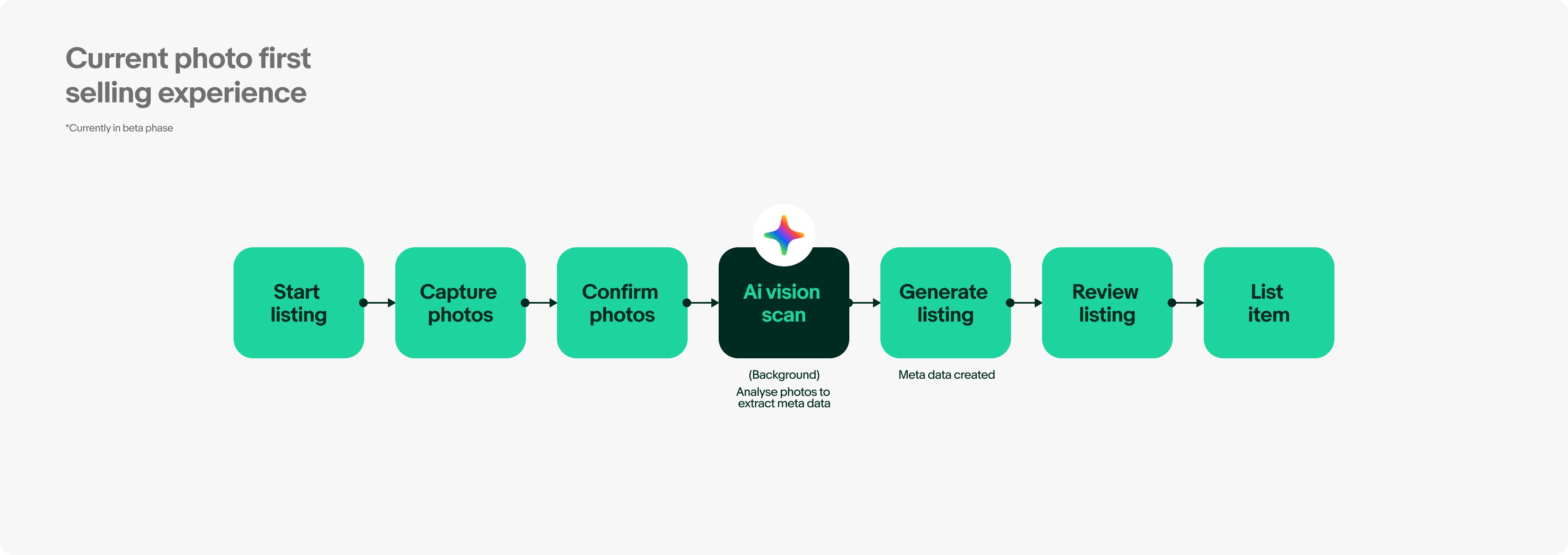
Technical Data Lag: Item metadata (brand/category) is not confirmed until after photos are processed, making it impossible to show brand-specific UI during the initial upload.
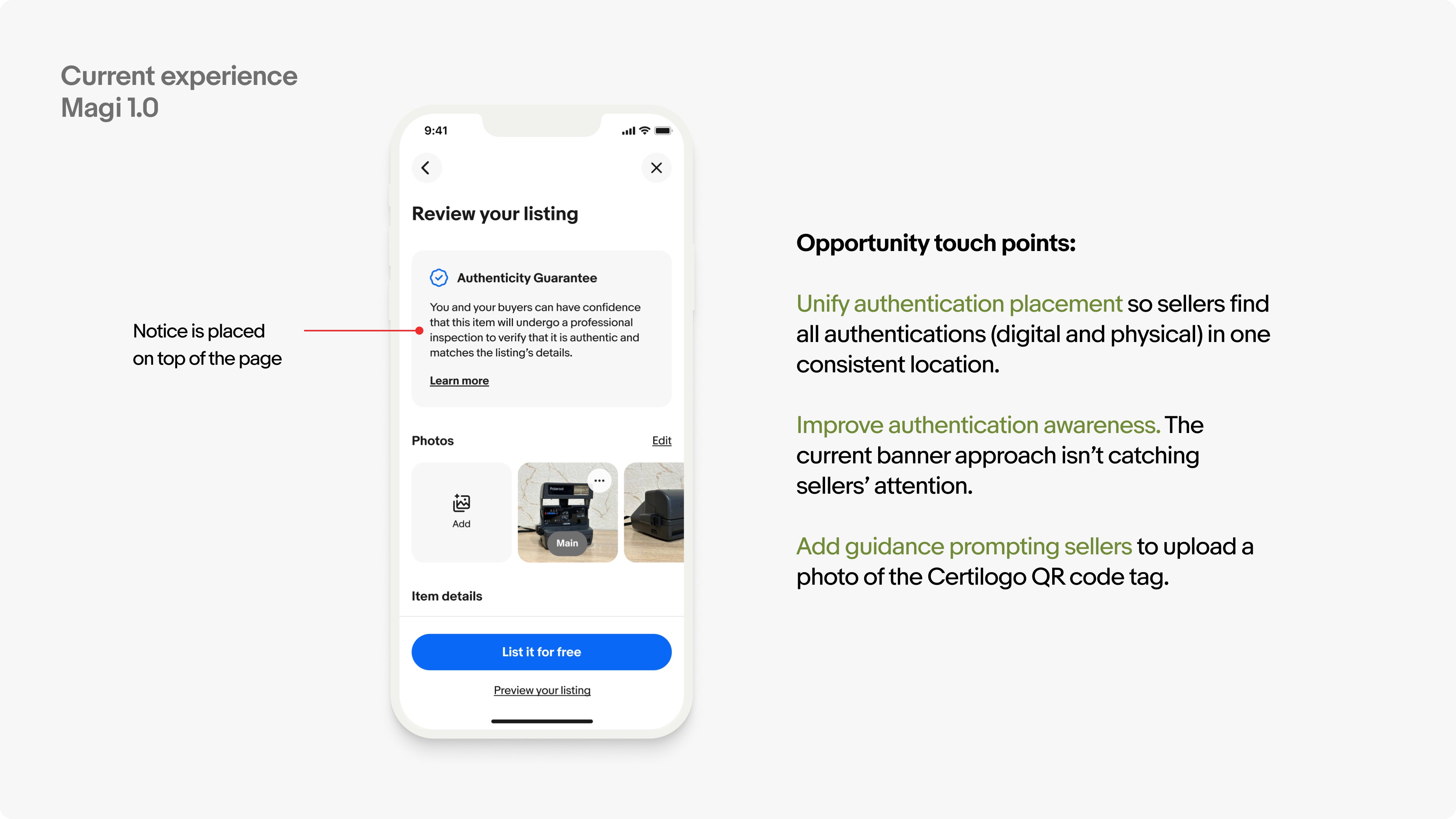
Legal & Brand Integrity: We could not use the "Authenticity Guarantee" badge because it legally promises a physical human inspection.
Use only the new beta photo first listing experience. To reduce risk.
Strategy
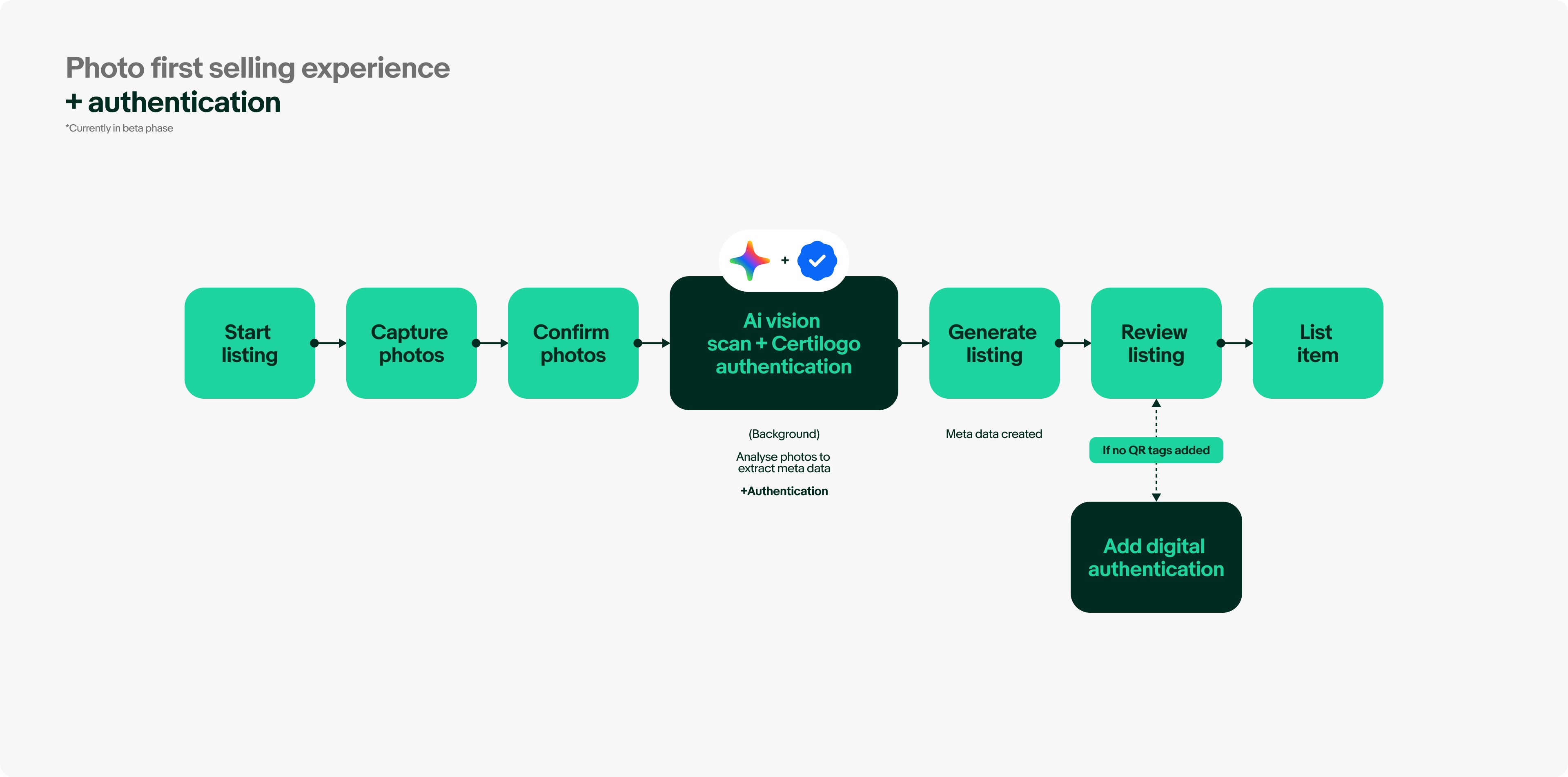
To maintain listing velocity, we moved away from a manual "form-filling" approach to a passive, background-listening model.
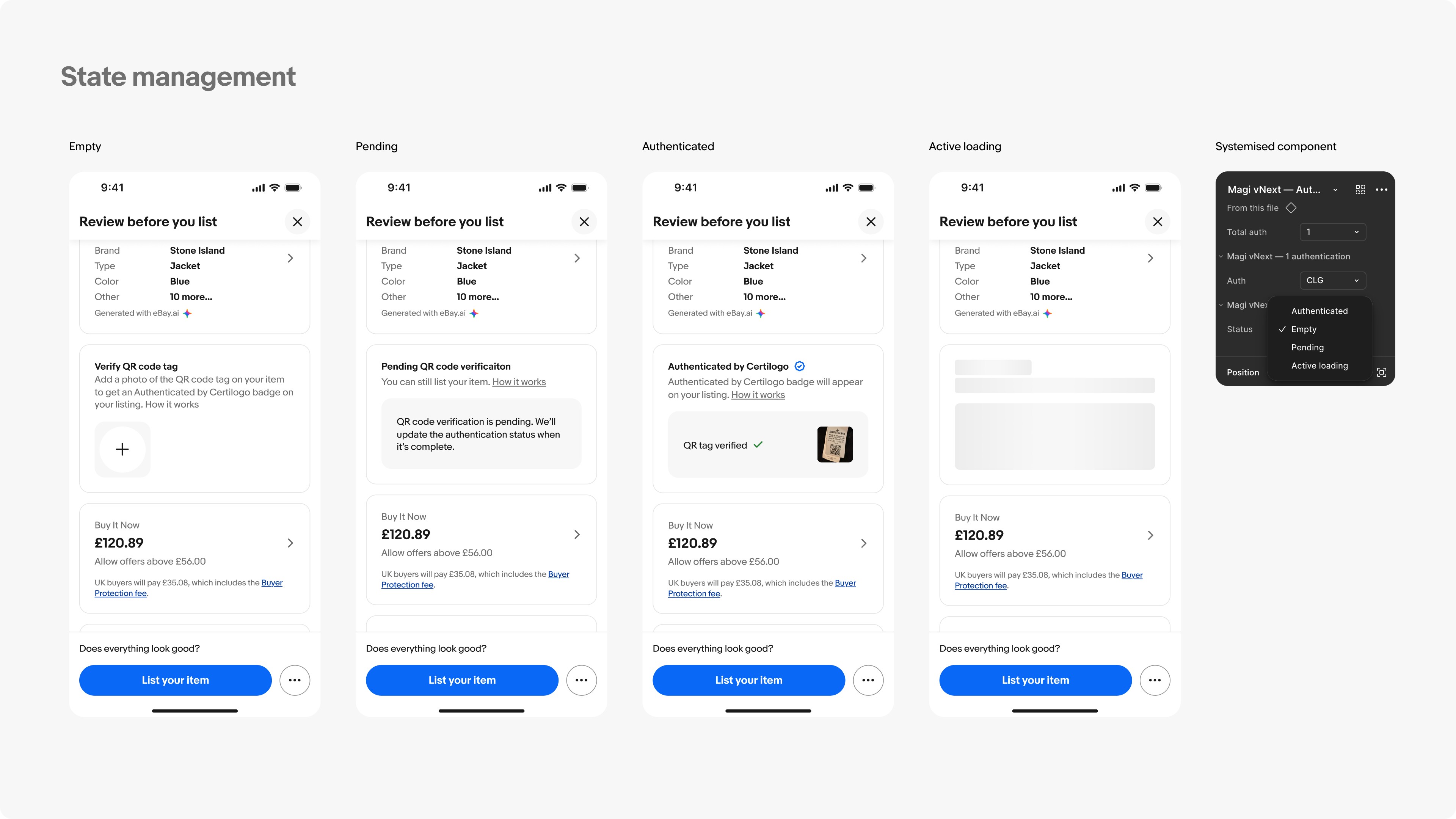
Systemic Maturity: For eligible brands, the "Review" screen would transform, revealing an "Authenticated by Certilogo" badge, turning a routine check into a high-value reward for the seller.
The Generic Bridge: To solve the data-lag issue, I designed a generic photo prompt ("Add labels, QR codes, or barcodes") that applied to all categories. This prompted the necessary behavior without needing upfront metadata.
The Intercept: Observing that power sellers were already photographing tags and QR codes, we built an AI listener to "intercept" these images during the standard upload process.
Execution:
Designing for the Real World
AI isn't perfect, and the physical world is messy. We designed robust "failure" and "compliance" states to handle real-world complexity:
The "Fake" Protocol
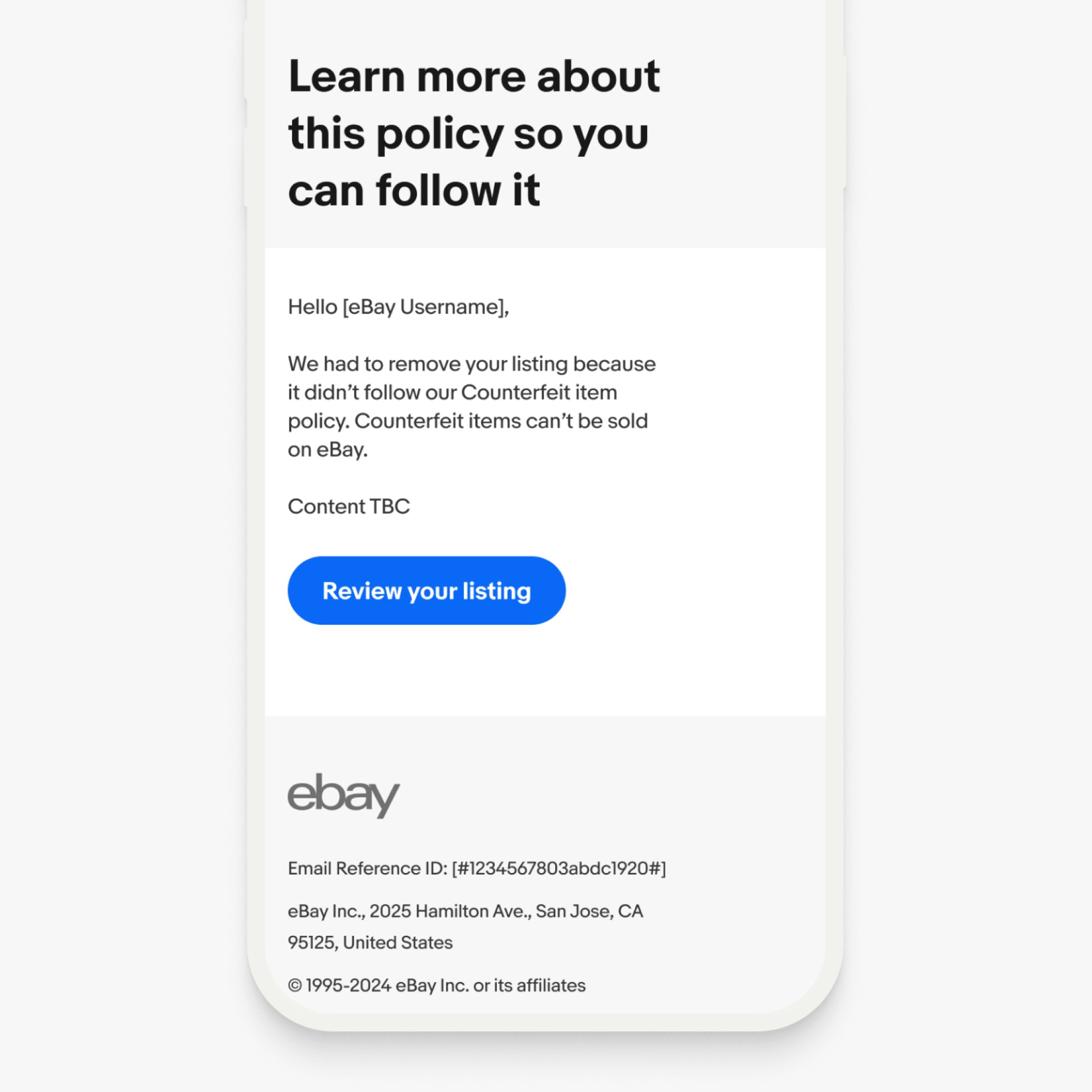
To avoid high-friction confrontations in-flow, items identified as counterfeit were allowed to proceed to an "In-Review" state. Following compliance patterns, these were handled via post-listing removal and email notification.
The Buyer Experience
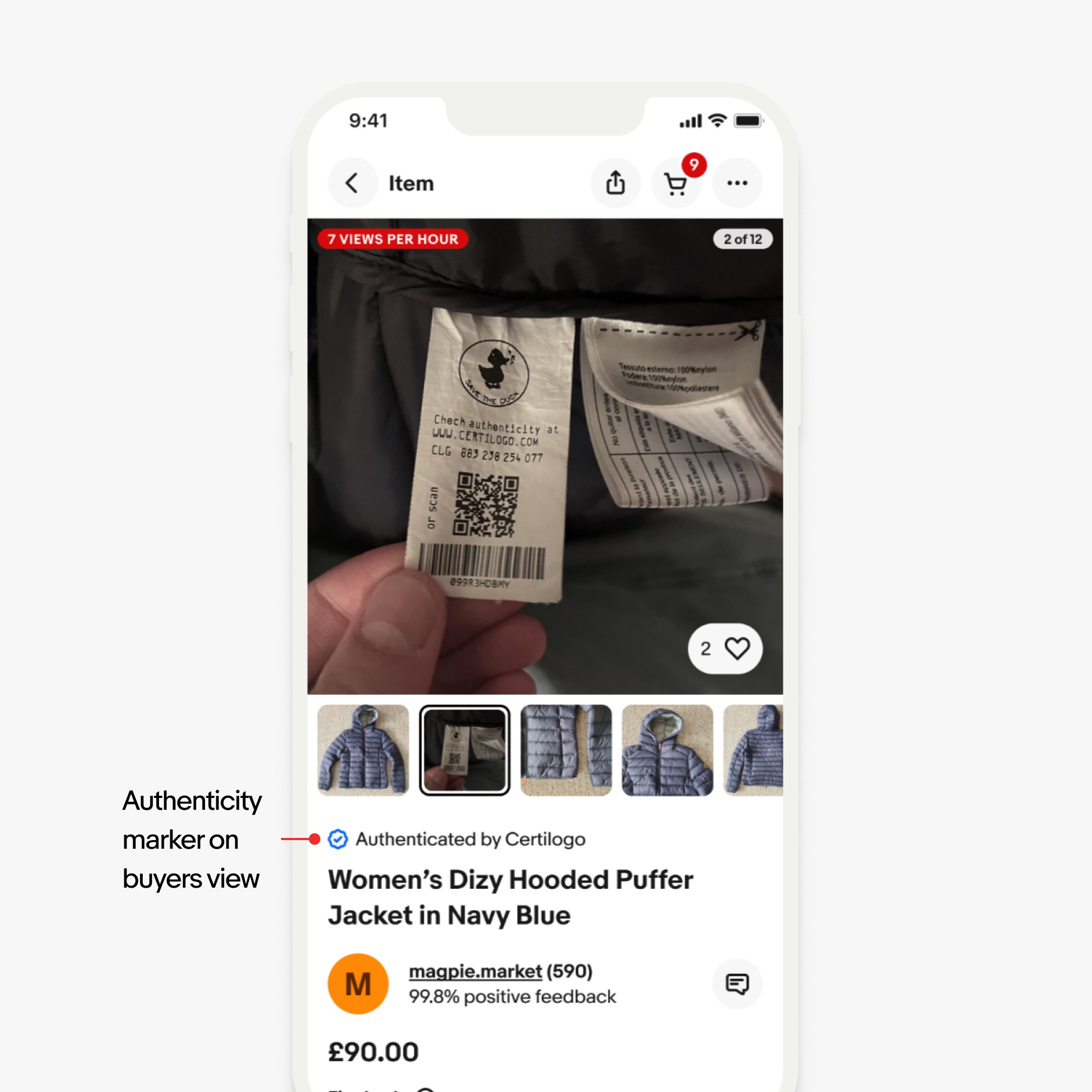
On the "View Item" page, we mirrored the visual language of the Authenticity Guarantee but used "Authenticated by Certilogo" messaging to maintain legal distinction while maximizing buyer confidence.
Impact
+13.4% Conversion Lift: For eligible items, the digital trust marker drove a significant double-digit increase in "Buy It Now" actions. Compared to items of eligible brand without trust marker.
Platform Efficiency: We successfully decoupled "Authentication" from "Logistics," proving we could scale trust globally without the overhead or carbon footprint of physical shipping centers.
Fraud Reduction: By verifying digital passports at the listing stage, we created a proactive shield, cleaning up the marketplace before a buyer ever interacted with the item.
Strategic influence: By verifying items digitally, we can train our Ai models to start to Authenticate items based on our vast library of imaged clothing and streetwear items, to help build models that can authenticate items without QR codes. Which is currently in discovery with myself and the selling team.
Reflections & Lessons Learned
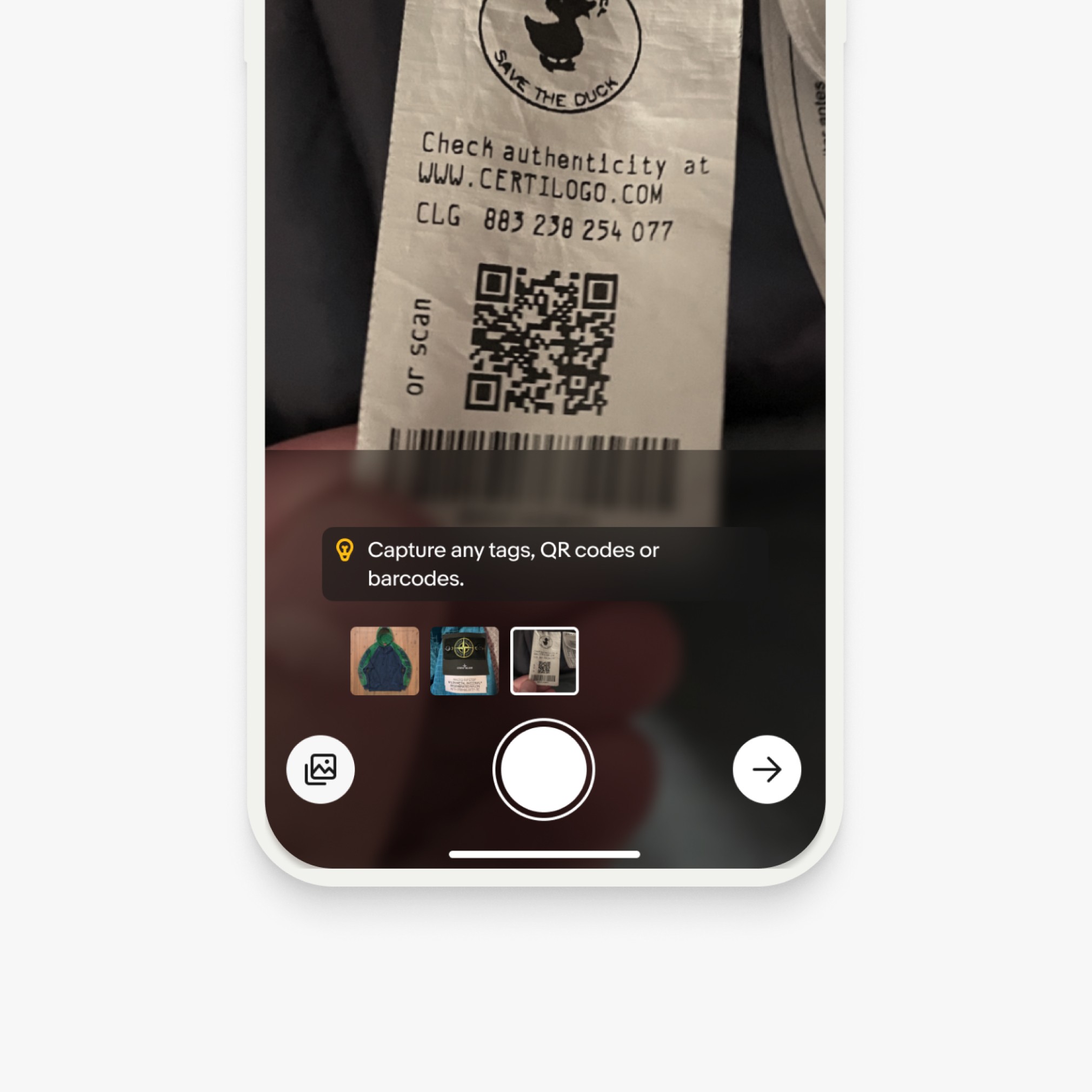
Strategic Influence: Negotiating the "Sacred" Flow
I am most proud of successfully negotiating the generic prompt within the core photo capture section. The Selling teams are notoriously protective of the listing journey. By demonstrating how a "capture-all" prompt adds value across all categories, not just our sub-base, I influenced a platform-wide change in the new seller listing experience that reduced friction later in the funnel.
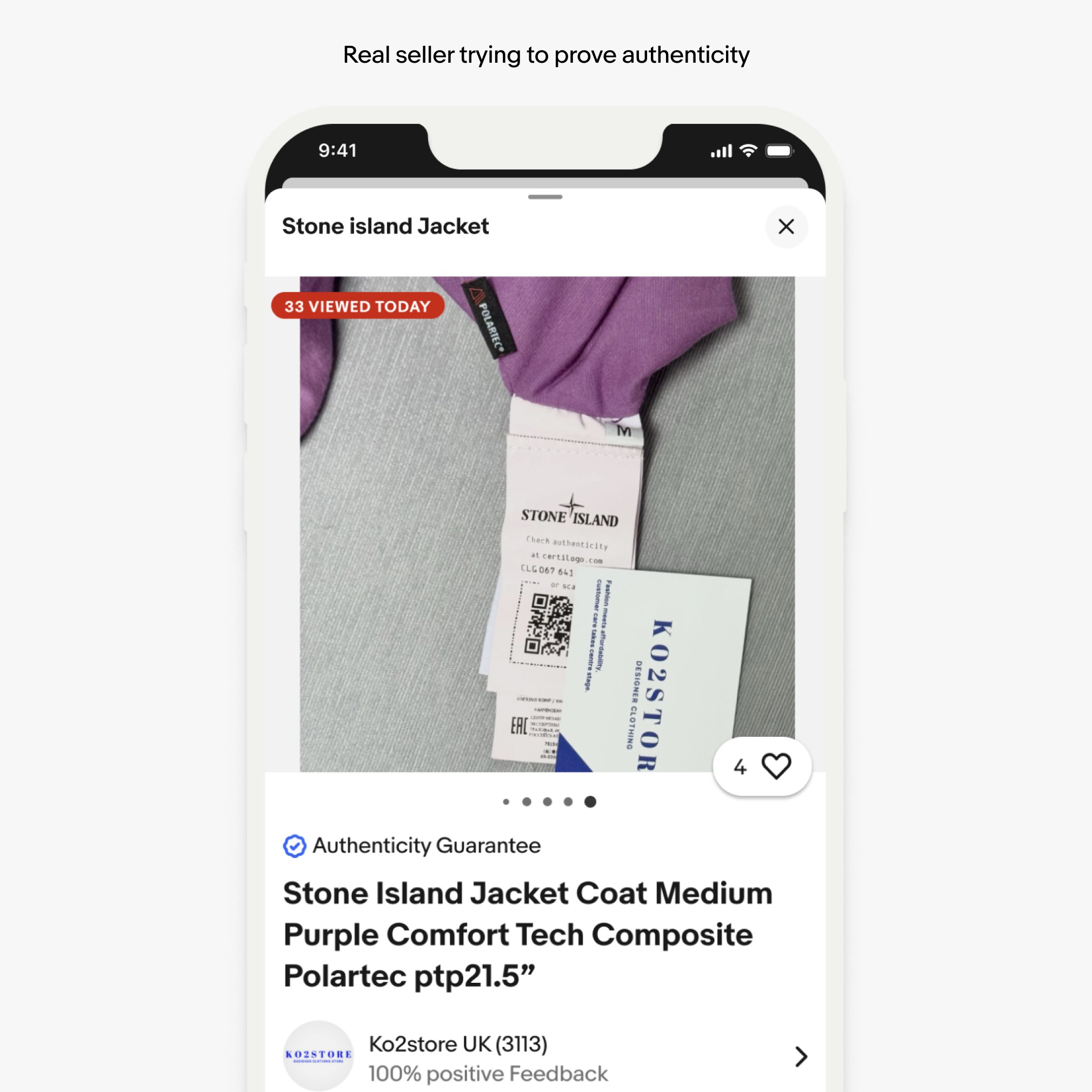
The User Insight: The "Evidence" Hunger
If I could go back, I would have spent more time investigating the "evidence-gathering" behaviors of sellers earlier. Users were already "hacking" the system by uploading photos of receipts and QR codes to prove authenticity. This project wasn't just about a new tech feature; it was about designing a formal, frictionless home for a behaviour that was already happening organically. Once we discovered this, it helped with influence and conversation between cross functional teams.

Let's connect, you can find me here.
Matthew Gledhill — Copyright © 2026